


A Global Perspective, Put into Practice
Sofia Perez, Class of 2028, grew up in Miami and moved to the UK at the age of 13. With Cuban heritage and a life shaped by shifting cultural contexts, Sofia has long been drawn to the intersections between communities, disciplines, and ways of understanding the world. Now in Tokyo for her rotation, she’s channeling that perspective into a student-led project that turns a topic often treated with silence into something visible, approachable, and empowering.
Sofia chose Minerva for the opportunity to learn across cultures while building real projects alongside peers from around the world. “I’ve always been between cultures,” she shared. “Being at Minerva and traveling with other Minervans has let me learn communities from the inside and see how different environments shape what we talk about, and what we avoid.”
From Research Gaps to Real Conversations
During her first year at Minerva, Sofia read “Invisible Women: Data Bias in a World Designed for Men” by Caroline Criado Perez. The book’s discussion of gender bias, especially in medicine, made abstract inequities feel immediate and personal.
She began researching menstrual health and quickly recognized a recurring pattern: many people never receive accessible, timely education about their own bodies. The result is confusion, stigma, and unnecessary fear.
Rather than stopping at awareness, Sofia decided to build something.
Project Hysterica: Built by Minervans, for Impact
The idea for Project Hysterica began casually. Sofia initially brainstormed a comic book that could help younger girls ask questions earlier and feel less alone. After talking through the idea with a friend, she intentionally chose the comic format to visually engage a younger audience and make conversations about menstrual health more accessible. It was something she felt she had lacked growing up. With no prior experience in comics, she decided to test the idea the simplest way possible—by sending a message to other Minervans.
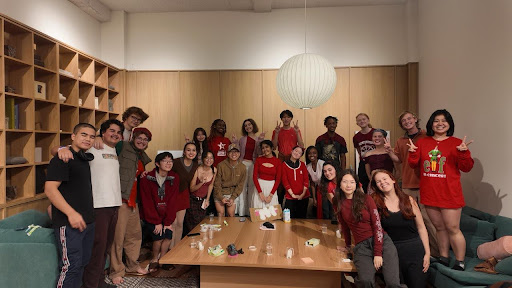
The response surprised her. Students across the community reached out with skills in illustration, writing, web design, and production. What started as a small experiment quickly evolved into a collaborative effort, with ten core contributors working together to bring the project to life.
Alongside Sofia, the core Project Hysterica team includes:
- Lea Leisse - Illustration co-lead
- Bemnet Nigatu - Illustration co-lead
- Divya Tarak - Writing lead
- June Wang - Illustrator and Figma specialist
- Iulia Boangiu - Illustrator; led the free pad initiative in Minerva residence halls; current social media strategist
- Imma Nkata - Illustrator and social media strategist
- Doga Huner - Writer, illustrator, and web designer (built the project’s website)
- Hanna Hoijer - Outreach planning
- Gaja Dubanovic - Early social media strategy planning
Their comic book, "Period an Origin: Story," blends humor, narrative, and accessible language to tackle stigma head-on. The team successfully launched a Kickstarter and is now fulfilling orders—turning a student idea into a tangible product with real reach. The campaign gained unexpected popularity beyond its immediate circle, receiving generous support from donors worldwide, including in Canada and Germany.
Beyond the book, Project Hysterica is expanding into new initiatives, including art and storytelling workshops with Shinagawa Shouei High School in Tokyo to normalize conversations about menstrual health, as well as translating the comic into Japanese. Within Minerva’s Tokyo residences, the team has also funded free period-product boxes on every floor, easing the burden for students when they need them most. Through these efforts, Project Hysterica is growing from a single comic into a broader mission that supports school, local, and international communities.
Designing Against Stereotypes
One of Sofia’s most memorable moments came from character design. As the team created Amara, the main character, they intentionally moved away from common portrayals of female superheroes that prioritize appearance over practicality. Instead, Amara wears cargo pants with oversized pockets and comfortable layering options—design choices that prioritize function and reject restrictive norms.
In the comic book, the “enemy” isn’t a person. It’s stigma—something embedded in norms, schools, and everyday habits. The team’s goal was to make that invisible force easier to name, question, and challenge.
She emphasizes that stigma is not unique to any one place. Through conversations with peers from different countries, she heard stories of young people experiencing fear or confusion simply because no one explained what was happening to their bodies. Those conversations strengthened her conviction that education needs to be earlier, more open, and grounded in empathy.
Advice for Future Minervans
Sofia’s advice is simple—”don’t wait for your passion project to look perfect on paper.” Start small. Test it. Try something you can actually manage right now.
And for students with multiple interests, she adds, you don’t have to shrink yourself to fit a single box. You can build a path that allows space for different parts of who you are. For Sofia—science and art—as long as you’re intentional about how you shape it.
If you’re looking for a university that challenges you academically while empowering you to turn ideas into impact, Minerva is where that work begins. Start your Minerva application today.
Quick Facts
Computational Sciences
Natural Sciences
Computational Sciences
Arts & Humanities, Natural Sciences
Social Sciences & Arts and Humanities
Business
Computational Sciences
Computational Sciences
Social Sciences & Business
Computational Sciences
Social Sciences
Computational Sciences & Business
Business & Computational Sciences
Computational Sciences
Computational Sciences
Social Sciences & Business
Business
Natural Sciences
Social Sciences
Social Sciences
Social Sciences & Business
Business & Computational Sciences
Business and Social Sciences
Social Sciences and Business
Computational Sciences & Social Sciences
Computer Science & Arts and Humanities
Business and Computational Sciences
Business and Social Sciences
Natural Sciences
Arts and Humanities
Business, Social Sciences
Business & Arts and Humanities
Computational Sciences
Natural Sciences, Computer Science
Computational Sciences
Arts & Humanities
Computational Sciences, Social Sciences
Computational Sciences
Computational Sciences
Natural Sciences, Social Sciences
Social Sciences, Natural Sciences
Data Science, Statistics
Computational Sciences
Business
Computational Sciences, Data Science
Social Sciences
Natural Sciences
Business, Natural Sciences
Business, Social Sciences
Computational Sciences
Arts & Humanities, Social Sciences
Social Sciences
Computational Sciences, Natural Sciences
Natural Sciences
Computational Sciences, Social Sciences
Business, Social Sciences
Computational Sciences
Natural Sciences, Social Sciences
Social Sciences
Arts & Humanities, Social Sciences
Arts & Humanities, Social Science
Social Sciences, Business
Arts & Humanities
Computational Sciences, Social Science
Natural Sciences, Computer Science
Computational Science, Statistic Natural Sciences
Business & Social Sciences
Computational Science, Social Sciences
Sustainability
Sustainability
Natural Sciences & Sustainability
Natural Sciences
Sustainability
Computational Sciences
Computational Sciences
Computational Science & Business
Data Science and Statistics, Digital Practices
Earth and Environmental Systems
Cognition, Brain, and Behavior & Philosophy, Ethics, and the Law
Computational Theory and Analysis
Computer Science and Artificial Intelligence
Brand Management & Computer Science and Artificial Intelligence
Computer Science and Artificial Intelligence
Economics and Society & Strategic Finance
Enterprise Management
Economics and Society
Cells and Organisms & Brain, Cognition, and Behavior
Cognitive Science and Economics & Political Science
Applied Problem Solving & Computer Science and Artificial Intelligence
Computer Science and Artificial Intelligence & Cognition, Brain, and Behavior
Designing Societies & New Ventures
Strategic Finance & Data Science and Statistics
Brand Management and Designing Societies
Data Science & Economics
Machine Learning
Cells, Organisms, Data Science, Statistics
Arts & Literature and Historical Forces
Artificial Intelligence & Computer Science
Cells and Organisms, Mind and Emotion
Economics, Physics
Managing Operational Complexity and Strategic Finance
Global Development Studies and Brain, Cognition, and Behavior
Scalable Growth, Designing Societies
Business
Drug Discovery Research, Designing and Implementing Policies
Historical Forces, Cognition, Brain, and Behavior
Artificial Intelligence, Psychology
Designing Solutions, Data Science and Statistics
Data Science and Statistic, Theoretical Foundations of Natural Science
Strategic Finance, Politics, Government, and Society
Data Analysis, Cognition
Conversation
A Global Perspective, Put into Practice
Sofia Perez, Class of 2028, grew up in Miami and moved to the UK at the age of 13. With Cuban heritage and a life shaped by shifting cultural contexts, Sofia has long been drawn to the intersections between communities, disciplines, and ways of understanding the world. Now in Tokyo for her rotation, she’s channeling that perspective into a student-led project that turns a topic often treated with silence into something visible, approachable, and empowering.
Sofia chose Minerva for the opportunity to learn across cultures while building real projects alongside peers from around the world. “I’ve always been between cultures,” she shared. “Being at Minerva and traveling with other Minervans has let me learn communities from the inside and see how different environments shape what we talk about, and what we avoid.”
From Research Gaps to Real Conversations
During her first year at Minerva, Sofia read “Invisible Women: Data Bias in a World Designed for Men” by Caroline Criado Perez. The book’s discussion of gender bias, especially in medicine, made abstract inequities feel immediate and personal.
She began researching menstrual health and quickly recognized a recurring pattern: many people never receive accessible, timely education about their own bodies. The result is confusion, stigma, and unnecessary fear.
Rather than stopping at awareness, Sofia decided to build something.
Project Hysterica: Built by Minervans, for Impact
The idea for Project Hysterica began casually. Sofia initially brainstormed a comic book that could help younger girls ask questions earlier and feel less alone. After talking through the idea with a friend, she intentionally chose the comic format to visually engage a younger audience and make conversations about menstrual health more accessible. It was something she felt she had lacked growing up. With no prior experience in comics, she decided to test the idea the simplest way possible—by sending a message to other Minervans.
The response surprised her. Students across the community reached out with skills in illustration, writing, web design, and production. What started as a small experiment quickly evolved into a collaborative effort, with ten core contributors working together to bring the project to life.
Alongside Sofia, the core Project Hysterica team includes:
- Lea Leisse - Illustration co-lead
- Bemnet Nigatu - Illustration co-lead
- Divya Tarak - Writing lead
- June Wang - Illustrator and Figma specialist
- Iulia Boangiu - Illustrator; led the free pad initiative in Minerva residence halls; current social media strategist
- Imma Nkata - Illustrator and social media strategist
- Doga Huner - Writer, illustrator, and web designer (built the project’s website)
- Hanna Hoijer - Outreach planning
- Gaja Dubanovic - Early social media strategy planning
Their comic book, "Period an Origin: Story," blends humor, narrative, and accessible language to tackle stigma head-on. The team successfully launched a Kickstarter and is now fulfilling orders—turning a student idea into a tangible product with real reach. The campaign gained unexpected popularity beyond its immediate circle, receiving generous support from donors worldwide, including in Canada and Germany.
Beyond the book, Project Hysterica is expanding into new initiatives, including art and storytelling workshops with Shinagawa Shouei High School in Tokyo to normalize conversations about menstrual health, as well as translating the comic into Japanese. Within Minerva’s Tokyo residences, the team has also funded free period-product boxes on every floor, easing the burden for students when they need them most. Through these efforts, Project Hysterica is growing from a single comic into a broader mission that supports school, local, and international communities.
Designing Against Stereotypes
One of Sofia’s most memorable moments came from character design. As the team created Amara, the main character, they intentionally moved away from common portrayals of female superheroes that prioritize appearance over practicality. Instead, Amara wears cargo pants with oversized pockets and comfortable layering options—design choices that prioritize function and reject restrictive norms.
In the comic book, the “enemy” isn’t a person. It’s stigma—something embedded in norms, schools, and everyday habits. The team’s goal was to make that invisible force easier to name, question, and challenge.
She emphasizes that stigma is not unique to any one place. Through conversations with peers from different countries, she heard stories of young people experiencing fear or confusion simply because no one explained what was happening to their bodies. Those conversations strengthened her conviction that education needs to be earlier, more open, and grounded in empathy.
Advice for Future Minervans
Sofia’s advice is simple—”don’t wait for your passion project to look perfect on paper.” Start small. Test it. Try something you can actually manage right now.
And for students with multiple interests, she adds, you don’t have to shrink yourself to fit a single box. You can build a path that allows space for different parts of who you are. For Sofia—science and art—as long as you’re intentional about how you shape it.
If you’re looking for a university that challenges you academically while empowering you to turn ideas into impact, Minerva is where that work begins. Start your Minerva application today.